Why Sustainable Agriculture Is Especially Important in Florida
Florida presents some unique challenges for sustainable farming. The soils here — particularly in suburban and coastal areas like Sarasota — are sandy, nutrient-poor, and often compacted by years of construction and neglect. The groundwater is shallow and vulnerable to contamination. The climate, while generous with heat and rain, also brings hurricanes, flooding, and pest pressure that conventional farms address with heavy chemical inputs.
At the same time, Florida’s year-round growing season is a remarkable gift. With the right soil biology in place, a farm in Sarasota can produce food twelve months a year — something most of the country can’t do. That makes regenerative farming here not just viable, but potentially more productive than conventional agriculture over the long run.
Sarasota County is no exception to Florida’s development pressures. As suburbs expand, farmland disappears. The farms that survive — or emerge in unexpected places — carry outsize importance. They aren’t just growing food. They’re holding space for a different relationship between people and land.
Moore Bliss Farm: Sustainable Agriculture in the Middle of Sarasota
In 2022, Elizabeth Moore purchased three acres of suburban land on Bliss Road in Sarasota — land that had been neglected for years, with sandy soil and little biological activity. Her vision was specific: build a working farm that could sustain itself through community participation, education, and events.
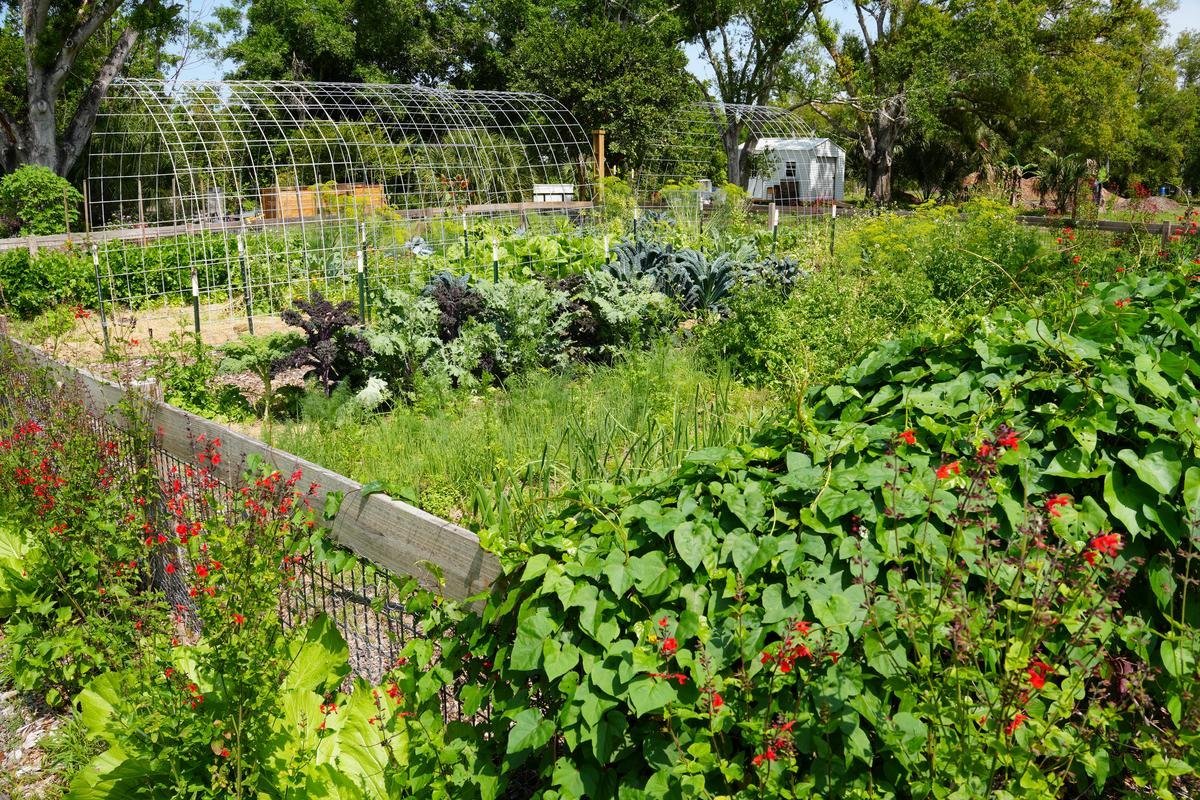
Today, Moore Bliss Farm is exactly that. Tucked into a Sarasota neighborhood near McIntosh Middle School, the farm grows vegetables, fruit trees, and Florida-native plants on land that just a few years ago was nearly barren. The secret ingredient? Compost — an endless supply of it, built right here on the property each week by a dedicated community of volunteers.
The farm has no animals, no heavy machinery, no chemical fertilizers. What it does have is a clear philosophy: close the loop. Food waste from local hospitals and restaurants comes in. It gets transformed, through a careful composting process, into rich biodynamic soil. That soil grows food. That food feeds people. And the cycle begins again.
Our Approach
The Four Pillars of Sustainability at Moore Bliss Farm
Soil Health First
Every decision at Moore Bliss Farm starts with the soil. Healthy, biologically active soil is the foundation of organic farming — and building it from sandy, suburban dirt is one of the farm’s most significant achievements. Through weekly composting, cover cropping, and careful observation, the farm has transformed depleted ground into living, productive earth.
Closed-Loop Systems
Nothing at Moore Bliss Farm is wasted. Food scraps become compost. Compost becomes soil. Soil grows food. Food feeds people. The farm operates as a closed-loop system where outputs become inputs, reducing waste and building fertility with every cycle.
No Chemical Inputs
The farm grows food without synthetic fertilizers, herbicides, or pesticides. Instead, it relies on biological pest management, companion planting, and the natural resilience that comes from healthy soil. This approach protects the local watershed, supports pollinators, and produces food that’s genuinely clean.
Community as Infrastructure
Sustainable agriculture can’t happen in isolation. The community is part of the farm’s operating system — dropping off compost, volunteering at workdays, attending events, and spreading the word. This isn’t a marketing strategy; it’s how the farm actually functions.
How the Community Participates
Sustainability at Moore Bliss Farm isn’t something that happens behind closed gates — it’s built on participation. The most visible example is Compost Monday, when dozens of Sarasota residents bring their food scraps to the farm each week. Volunteers sort, layer, and turn the compost piles using techniques rooted in biodynamic agriculture.
Beyond composting, the farm hosts cooking classes where participants learn to work with the seasonal produce grown on the property. Farm-to-table dinners bring the community together for meals prepared with ingredients from the garden. And private events — from small weddings to birthday celebrations — help fund the farm’s continued operation.
Elizabeth Moore’s vision has always been that the farm should pay for itself — not through industrial production, but through education, community events, and the simple joy of growing food together. New College of Florida students have contributed soil science research. Nearby McIntosh Middle School is a natural future partner for educational programming.
The farm is also working toward a farmstand at the entrance to Bliss Road — a place where Sarasota residents can pick up fresh, organically grown produce from just down the street. That kind of hyperlocal food system is the end goal: food grown, sold, and eaten within the same community.
Come Visit — You’re Welcome Here
Moore Bliss Farm isn’t a conventional attraction — it’s a living, working farm in the middle of Sarasota’s suburbs. Elizabeth Moore puts it simply: “It’s not open to the public, but I like people to come over here. People are welcome. If you self-select — you want to be here — you’re welcome.”
The best way to experience the farm is to come on a Monday evening for Compost Monday, attend one of the farm-to-table dinners, or sign up for a cooking class. Each event is a chance to see sustainable agriculture in action — and to become part of the community that makes it work.